




Start With a Clear Photograph

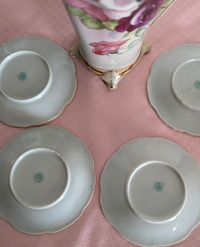
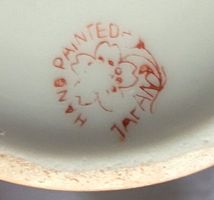
Place the piece on a soft, stable surface and examine its underside in good light. Take one photograph of the entire base and another close-up of the mark. Photograph the whole object, too.

Record everything you can see:


Letters, words, and country names.


Symbols such as crowns, wreaths, or crossed swords.


Numbers, including faint impressed numbers.


The mark’s color and how it was applied.


Additional signatures or labels. For shallow impressions, light directed from the side can make the details easier to see. Avoid rubbing chalk, ink, or other substances into the mark. A tiny detail can make a difference, so resist the temptation to read a blurry letter as the one you expect.

Understand What the Mark Might Represent

Not every mark names the factory that made the porcelain. A piece may carry several marks, each serving a different purpose.


A factory mark may identify the porcelain manufacturer. A decorator’s mark may identify the workshop that painted it. Other marks can refer to a retailer, importer, pattern, model, or individual worker.


Numbers are especially easy to misinterpret. They may be production references rather than dates. Meissen, for example, explains that its porcelain can carry decoration numbers, painter’s numbers, and year marks alongside its crossed swords. Each needs to be interpreted within that maker’s system.


A number that looks like a year is not necessarily the year the piece was made.

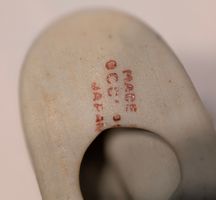
Occupied Japan Occupied Japan

Occupied Japan

Match the Exact Mark

Use this space to develop your idea and move the story forward. Add details, examples, or observations that make your point clearer. Keep each paragraph focused around one idea. Add more sections to build your story step by step.

Be Careful With Familiar Names and Symbols

A recognizable mark can be exciting, but it still needs context.


Crossed swords: These are associated with Meissen, which continues to apply its trademark by hand today. The presence of crossed swords alone therefore does not establish that a piece is antique. The specific mark and the porcelain itself need further examination.


Nippon: Collectors commonly use “Nippon-era” for Japanese export porcelain associated with the 1891–1921 period. The International Nippon Collectors Club documents many different backstamps from this era. Identifying the complete stamp is more useful than relying on the word alone, and later reproductions must also be considered.


Chinese reign marks: A mark naming an emperor does not necessarily mean the object was made during that reign. Earlier reign marks were sometimes used on later porcelain, including as references to admired historical wares rather than deliberate attempts to deceive. The Getty documents examples of this practice.

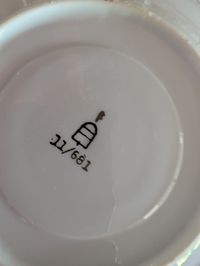
Antique Limoges PorcelainAntique Limoges Porcelain

Antique Limoges Porcelain

Check Whether the Whole Piece Fits

Once you have a possible identification, return to the object.


Does its shape match documented examples? Are the decoration, handles, foot rim, and glaze consistent with the proposed maker and period? Do its dimensions make sense?


Wear can provide context, but scratches, staining, and crazing do not prove age. Equally, a carefully preserved antique may show surprisingly little wear.


For a potentially valuable or difficult piece, a specialist in that type of porcelain can help assess evidence that a mark alone cannot settle.

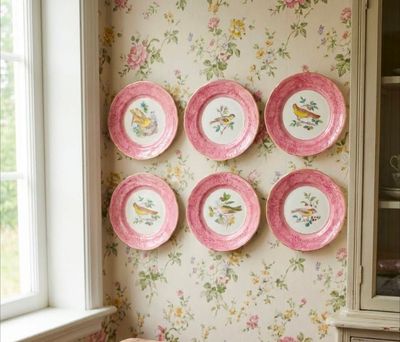
Royal Vienna Royal Vienna

Royal Vienna

Notice How the Mark Was Applied

Porcelain marks may be painted, printed, impressed into the clay, or incised with a tool. Some sit beneath the glaze; others were applied over it.


Record these details when comparing your piece with reference examples. A similar symbol applied in a different way may deserve closer investigation.


No single application method proves age. A painted mark is not automatically antique, and a printed mark is not automatically modern.

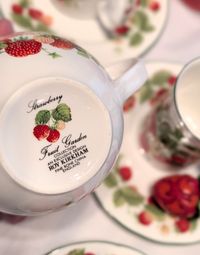
Vintage Roy Kirkham “Fruit Garden” Fine Bone China Tea Set - Set of NineteenVintage Roy Kirkham “Fruit Garden” Fine Bone China Tea Set - Set of Nineteen

Match the Exact Mark

When researching a mark, look for more than a general resemblance.

Compare the lettering, spacing, punctuation, border, and arrangement of symbols. Check whether a country name or additional phrase appears beneath the main design.


Manufacturers sometimes changed their marks over time, making a particular version useful for estimating a date range. However, some marks remained in use for many years.


Start with manufacturer archives, museum collections, specialist reference books, and established collectors’ organizations. Image searches can help you find leads, but a seller’s identification should be checked against a reliable reference.

What If There Is No Mark?

An unmarked piece can still be antique. Identification may depend on its form, materials, decoration, and comparison with documented examples.

Sometimes the maker remains unknown. In that case, an honest description is better than an impressive name without enough evidence.


At Vintage With An Edge, I love that a small mark can open the door to a much larger story. It gives us a reason to look closer, learn about the people who made these objects, and appreciate the care that helped them survive.


We may never uncover every detail, but each discovery adds something to the pleasure of owning a piece of the past.


Beautiful things deserve more than one lifetime.

Beautiful things deserve more than one lifetime. Our goal is to make your home beautiful and unique, while making the world a better place. Curated vintage and antiques for distinctive interiors.

Gabrielle, Founder & Curator, Vintage With An Edge

More Posts

How to Identify Murano Glass: Clues to Look For and Myths to AvoidHow to Identify Murano Glass: Clues to Look For and Myths to Avoid
How to Identify Murano Glass: Clues to Look For and Myths to Avoid

There is something captivating about a beautiful piece of art glass. Rich colors, delicate threads, and shapes that seem to move with the light can make you stop and look a little longer.


But is it Murano?


That question takes more than spotting a colorful swirl or turning a vase over to look for a signature. Identifying Murano glass means gathering clues—and knowing which clues can actually support its origin.
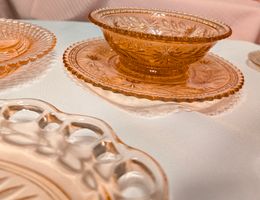
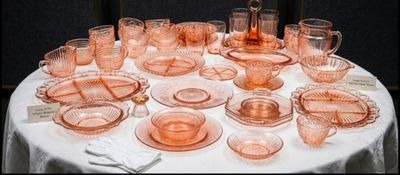
<p>Pink Depression Glass: A Little History, a Little Romance, and Plenty of Character.</p><p>Pink Depression Glass: A Little History, a Little Romance, and Plenty of Character.</p>

Pink Depression Glass: A Little History, a Little Romance, and Plenty of Character.

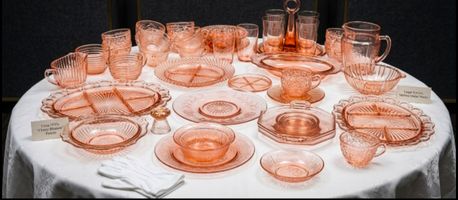
A pink glass bowl catching the afternoon light can change the feeling of a room. There is something inviting about its soft color and patterned surface—a small detail that makes a shelf or table feel more personal.


For some of us, pink Depression glass brings back memories of a grandmother’s china cabinet. For others, it is a first discovery at an antique shop. Either way, its appeal goes beyond nostalgia. These pieces bring color, texture, and history into the homes we live in today.


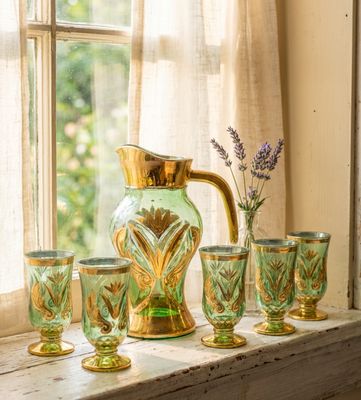
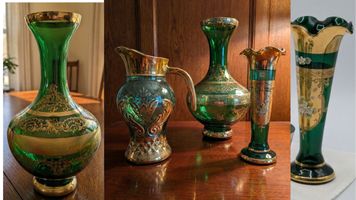
<p>Bohemian Glass: Color, Craftsmanship, and Beauty That Survives Time</p><p>Bohemian Glass: Color, Craftsmanship, and Beauty That Survives Time</p>

Bohemian Glass: Color, Craftsmanship, and Beauty That Survives Time

A richly colored goblet, a vase decorated with delicate flowers, or a decanter that catches the light—Bohemian glass invites us to pause and look closer. The first thing we notice may be its beauty. Then we begin to see the details: the curve of a handle, the precision of an engraved leaf, or the contrast between colored glass and a clear-cut design.


That is what draws me to these pieces. Something so fragile has survived changing homes and generations of life, carrying the work of its makers into the present.

Antique vs. Vintage: What’s the Difference?Antique vs. Vintage: What’s the Difference?
Antique vs. Vintage: What’s the Difference?

A hand-painted porcelain cup, a pink glass serving bowl, a silver tray with beautifully worn handles—each has a past. But when does an older piece become an antique, and what makes something vintage?

These words are often used interchangeably, but they tell us different things about an object’s age. Understanding the difference can help you shop with confidence and appreciate the pieces you already own.

Collecting Depression Glass: A Guide to Its History, Colors, Patterns & ValueCollecting Depression Glass: A Guide to Its History, Colors, Patterns & Value
Collecting Depression Glass: A Guide to Its History, Colors, Patterns & Value

There is something special about Depression glass. A soft pink plate catching the afternoon light, a green serving bowl displayed in a cabinet, or a delicate blue tumbler can bring a little piece of American history into today's homes.


Created during an era when families were stretching every dollar, Depression glass became an affordable way to bring color and decoration to the everyday table. What was once inexpensive household glassware is now collected, researched, displayed, and appreciated by vintage enthusiasts around the world.


At Vintage With An Edge, we believe the appeal of vintage treasures goes beyond their appearance. Every surviving piece has a history, and Depression glass offers a fascinating glimpse into the homes and everyday lives of generations before us.


Whether you are beginning your first collection or searching for a particular pattern to complete a set, understanding its history, identifying characteristics, and value can make collecting even more rewarding.

Gabrielle, Founder & Curator, Vintage With An Edge | Oct 24

How to Identify Antique Porcelain Marks: A Beginner’s Guide

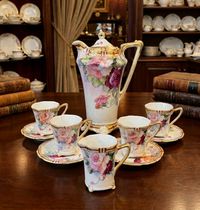
One of the first things I do when looking at a porcelain piece is turn it over. Beneath the painted flowers, gold trim, or delicate handles, there may be a small clue to its history: a crown, a few initials, a handwritten number, or a name.


These marks can help us discover where a piece came from and sometimes when it was made. But understanding them takes more than finding a similar symbol online.


A porcelain mark is a starting point. The strongest identification comes from studying the mark and the object together.