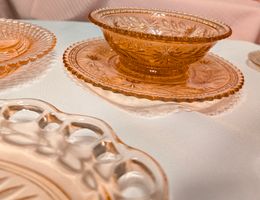
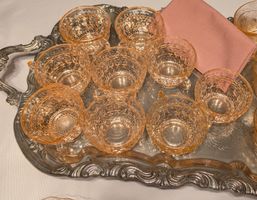
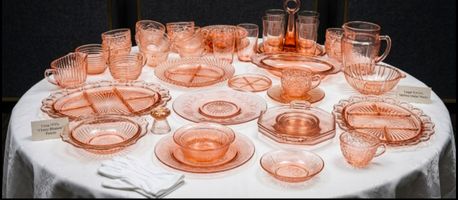
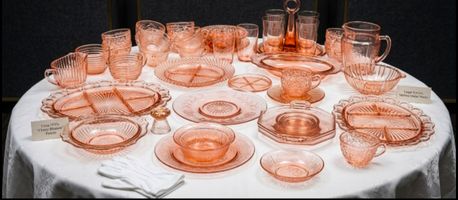
Part of the pleasure of collecting pink Depression glass is learning to recognize its patterns. Some feature flowers and scrolling details, while others use strong geometric shapes. A few well-known examples offer a lovely introduction to that variety.
Cherry Blossom — Jeannette Glass Company
With branches of blossoms and leaves spreading across its surface, Cherry Blossom has an unmistakably romantic feel. Its detailed decoration makes it especially appealing to those who enjoy floral china and garden-inspired interiors. Reproductions exist, so careful identification matters when purchasing this pattern.
American Sweetheart — Macbeth-Evans Glass Company
American Sweetheart is known for its delicate appearance and intricate, lace-like decoration around the edges. In pink, it has a particularly soft presence, making it a beautiful complement to white porcelain, embroidered linens, and a thoughtfully arranged display cabinet.
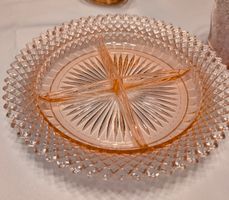
Miss America — Hocking Glass Company
Miss America brings a little sparkle to the table. Its raised diamond pattern creates a textured surface that catches the light, giving the glass a more dramatic appearance. It is a good example of how pink Depression glass can feel bold as well as romantic.
Royal Lace — Hazel-Atlas Glass Company
Royal Lace features an elaborate, lace-inspired design with closely arranged decorative details. Its richly patterned surface rewards a closer look and makes even a single plate or bowl an interesting display piece.
Sharon, Often Called “Cabbage Rose” — Federal Glass Company
Recognizable for its rose motifs and scrolling foliage, Sharon has a fuller floral look. The pink version pairs beautifully with vintage textiles and other botanical pieces. “Cabbage Rose” is a familiar collector nickname for the pattern.
Adam — Jeannette Glass Company
Adam combines an angular, often squared shape with molded floral decoration. Its more structured silhouette offers a different look from the softer curves of many other patterns, making it appealing to collectors who enjoy geometric design.
You do not need to choose a favorite immediately. Start by noticing what draws your eye: a floral border, an angular handle, or the way a textured bowl catches the light. Learning the pattern names gives you a useful starting point for researching pieces and gradually building a collection.